

How to Start Your First Collage Quilt:
Choosing Between a Parchment Pressing and Foundation Panel Pattern
By Emily Taylor | CollageQuilter.com
There’s a moment every aspiring quilter knows: standing in front of a pile of beautiful fabric, heart full of inspiration, and wondering: where do I even begin? If you’ve been drawn to the painterly, artistic world of collage quilting, I have wonderful news for you. Getting started is more approachable than you might think, and there’s more than one beautiful path to your first finished piece.
At Collage Quilter, I offer two distinct methods for creating fabric art: parchment pressing patterns and foundation panel patterns. Both are equally beginner-friendly. The difference isn’t about skill level, it’s about project size, time commitment, and what excites you most right now. Let’s explore both so you can choose the path that calls to your creative spirit.
What is Parchment Pressing?
Parchment pressing is a fabric collage technique that creates stunning textile art—no quilting required. It’s an intimate, meditative process of building a fabric collage piece by piece, and the results are breathtaking.
Here's how it works:
- Your pattern comes with a template that includes a gray-tone value guide. You trace this template onto a sheet of parchment paper (same baking paper you’d use in your kitchen. Parchment paper is the perfect surface because it’s nonstick and heat resistant).
- You prepare your fabric with Lite Steam-A-Seam 2, a fusible web adhesive that allows fabric pieces to bond together when pressed.
- Following the value guide in your template, you cut small pieces of fabric and begin placing them directly onto the parchment paper.
- The first few pieces won’t stick perfectly because parchment is nonstick by design! A mini wand iron is helpful for pressing those initial pieces into place. But as you build your collage, the pieces begin to adhere to each other.
- Once your collage is complete, you press all the pieces firmly together. They bond into a single textile piece that you can peel right off the parchment~ like a beautiful fabric sticker!
- You then get to audition it against different background fabrics to find the perfect pairing. You can use your own fabric or choose one of my custom-designed background panels.


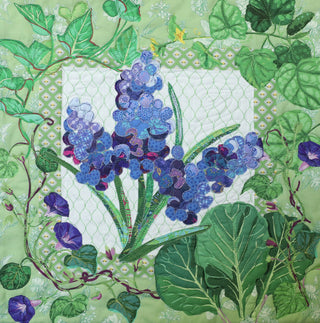
Parchment pressing projects tend to be smaller in scale, which makes them a wonderful way to experience collage quilting without committing to a large project. And because quilting is entirely optional, your finished piece is a complete work of textile art on its own.
Parchment pressing projects tend to be smaller in scale, which makes them a wonderful way to experience collage quilting without committing to a large project. And because quilting is entirely optional, your finished piece is a complete work of textile art on its own.
What is a Foundation Panel?
Foundation panel quilting is a larger-scale collage method that results in a full quilted artwork. Included in my foundation panel patterns is a pre-printed gray tone guide on 100% cotton, so you collage directly onto the included fabric rather than make a tracing onto parchment paper like a parchment pressing pattern. Like parchment pressing, it uses fusible web to build a fabric collage, but on a bigger canvas, with quilting as part of the finished piece.
Foundation panel quilts are designed to be layered, quilted, and bound into heirloom-quality wall hangings or art quilts. If you feel ready to create something larger and you’re excited about the quilting process, this method opens up a world of artistic possibility.

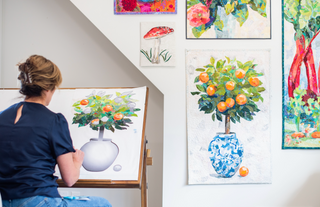
My Clementine pattern is a perfect example of a beginner-friendly foundation panel design. It’s simple, elegant, and absolutely beautiful, and it will teach you everything you need to know to grow into more complex collage quilts.
Which Method is Right for You?
Both methods are equally welcoming to beginners. Here’s a simple guide to help you choose:
Choose parchment pressing if:
- You’d love to start with a smaller, quicker project
- You want to explore the technique before committing to a larger piece
- You’d prefer to skip quilting for your first project
- You love the idea of creating textile art that can stand on its own
Choose foundation panel quilting if:
- You’re ready to create a full-size quilted artwork right away
- You’re excited about the quilting process
- You want to create something larger and more expansive
- You're feeling confident in your collage abilities
There is no wrong choice. Many collage artists start with a parchment pressing project to get comfortable with the technique, then move on to foundation panels as their confidence grows. Others dive straight into a foundation panel quilt because a larger creative challenge is exactly what excites them. Trust your instincts, they’ll guide you to the right starting place!
What You’ll Need to Get Started
Regardless of which method you choose, the basic supply list is simple:
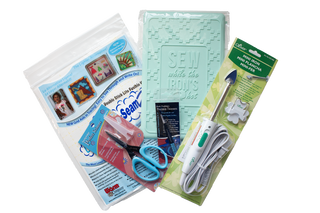
- A Collage Quilter pattern of your choice (or download our free mushroom pattern to try the technique first!)
- Fabric in a variety of colors and values
- Lite Steam-A-Seam 2 fusible web adhesive
- An iron and pressing surface
- Scissors (I like Karen K Buckley 6” scissors)
- For parchment pressing: a mini wand iron and parchment paper
- For foundation panel quilting: a sewing machine for quilting and binding
Your Creative Journey Begins Today!
Collage quilting is fundamentally an art form about intuition, color, and creative expression. Whichever method you choose, you’re stepping into a process that is as meditative as it is beautiful and a way of creating something truly original with your own hands.
Don’t wait for the perfect moment or the perfect fabric collection. Pick the method that makes your heart a little more excited, gather your supplies, and just dive in!
Browse our full collection of parchment pressing patterns and foundation panel designs, or start with our free mushroom pattern to experience the joy of collage quilting yourself. Your first collage quilt is waiting.
Happy creating,
Emily
CollageQuilter.com